Huge Move: SC Sets 3-Month Limit for High Court Judgments
Have you ever waited years for a court decision? Endless delays completely shatter public trust in the legal system. Litigants often wait several months just to hear a judgment after the final arguments end.
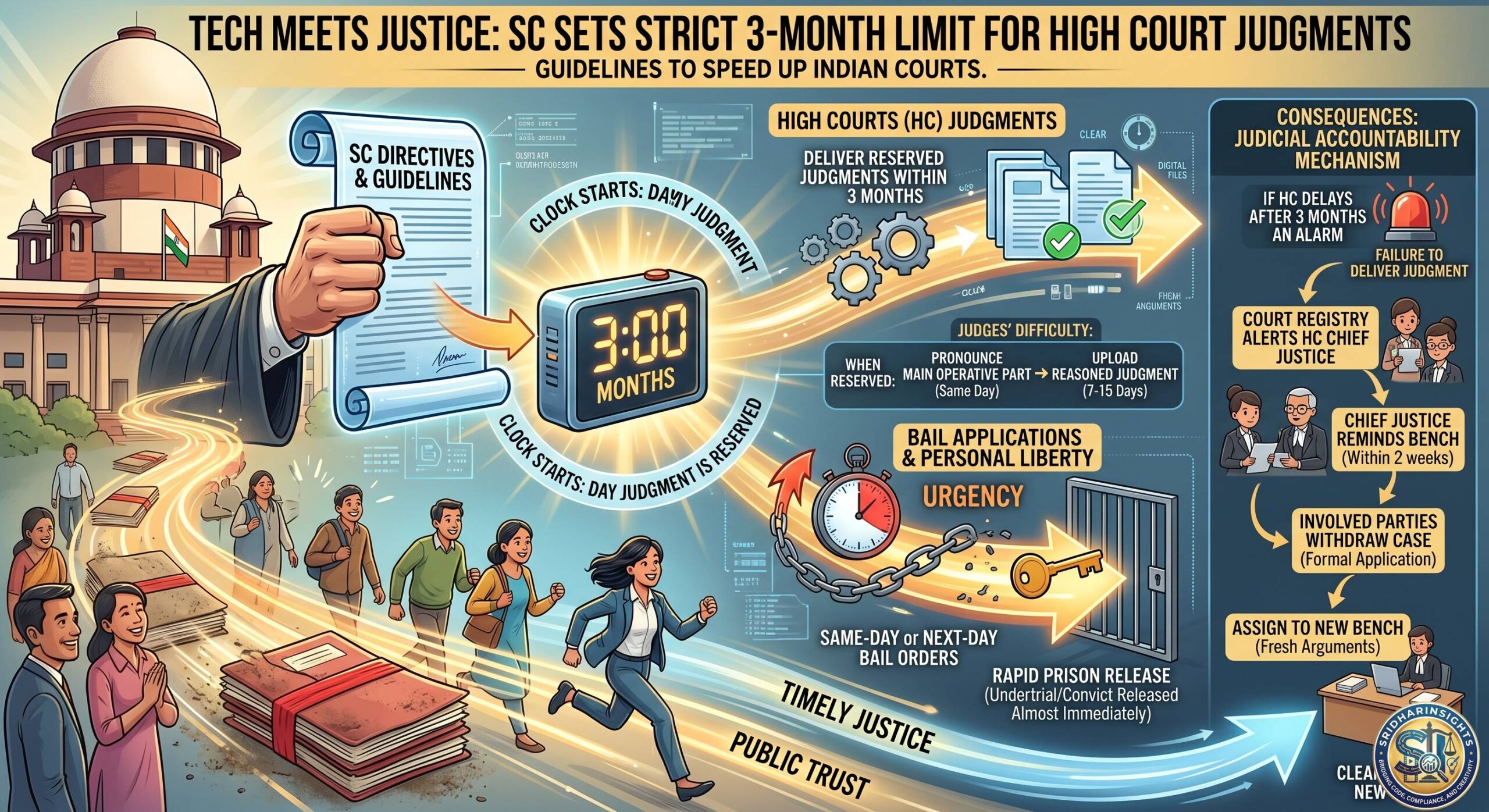
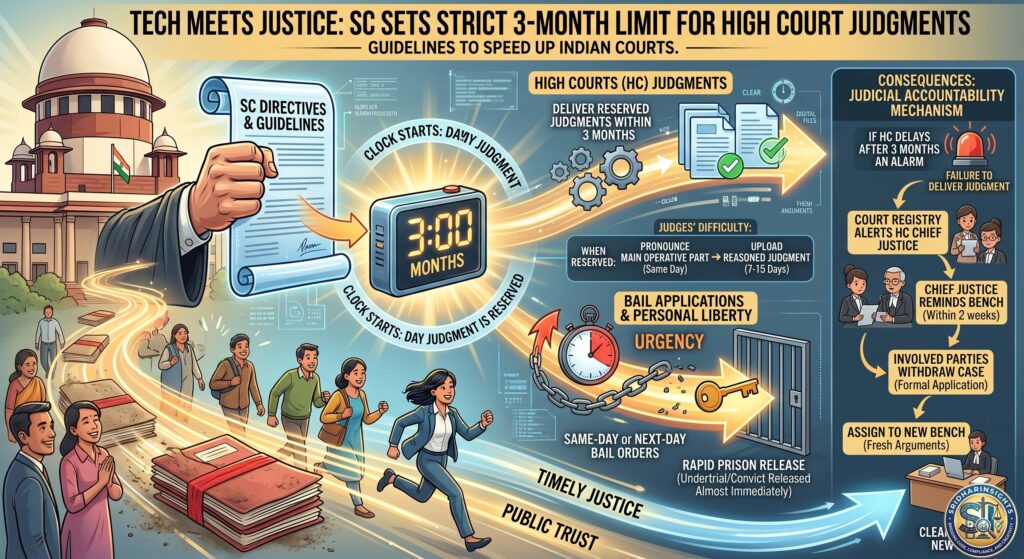
However, the Supreme Court of India is finally fixing this broken system. Recently, the apex court issued strict, binding guidelines to all High Courts. Judges must now deliver their reserved judgments within a strict three-month timeline.
Here is a detailed breakdown of these historic new rules designed to speed up Indian courts.
The Strict Three-Month Deadline
Chief Justice Surya Kant and Justice Joymalya Bagchi issued these powerful directions. The bench noted that keeping cases pending indefinitely violates your fundamental rights.
Therefore, the Court ordered a hard three-month limit. The clock starts the exact day a judge reserves the final judgment. Furthermore, courts must decide matters concerning personal liberty and bail much faster.
Faster Bail and Urgent Releases
Bail applications require absolute urgency. The Supreme Court declared that High Courts must pronounce bail orders on the very same day. If the judge reserves the order, they must upload it by the next day.
Additionally, court staff must quickly communicate these bail orders to prison authorities. Consequently, authorities should release the undertrial or convict almost immediately.
Sometimes, judges face practical difficulties in writing long judgments quickly. In such urgent cases, the judge can pronounce the main operative part in open court. Then, they must upload the fully reasoned judgment within seven to fifteen days.
Consequences: What Happens If Judges Delay?
The Supreme Court created a brilliant accountability mechanism to enforce this rule. What happens if a High Court bench fails to deliver the judgment within three months?
The court registry must step in immediately. Officials must place the delayed case directly before the High Court Chief Justice. Then, the Chief Justice will formally remind the delaying bench within two weeks.
If the bench still fails to deliver the judgment after another two weeks, the rules change. The involved parties can file a formal application to withdraw the case. The Chief Justice can then assign the matter to a completely new bench for fresh arguments.
Why This Ruling Matters
These sweeping guidelines prioritize your constitutional right to timely justice. By setting strict administrative deadlines, the Supreme Court guarantees that judges remain strictly accountable.
Ultimately, these new rules ensure that justice is not just done, but seen to be done quickly.