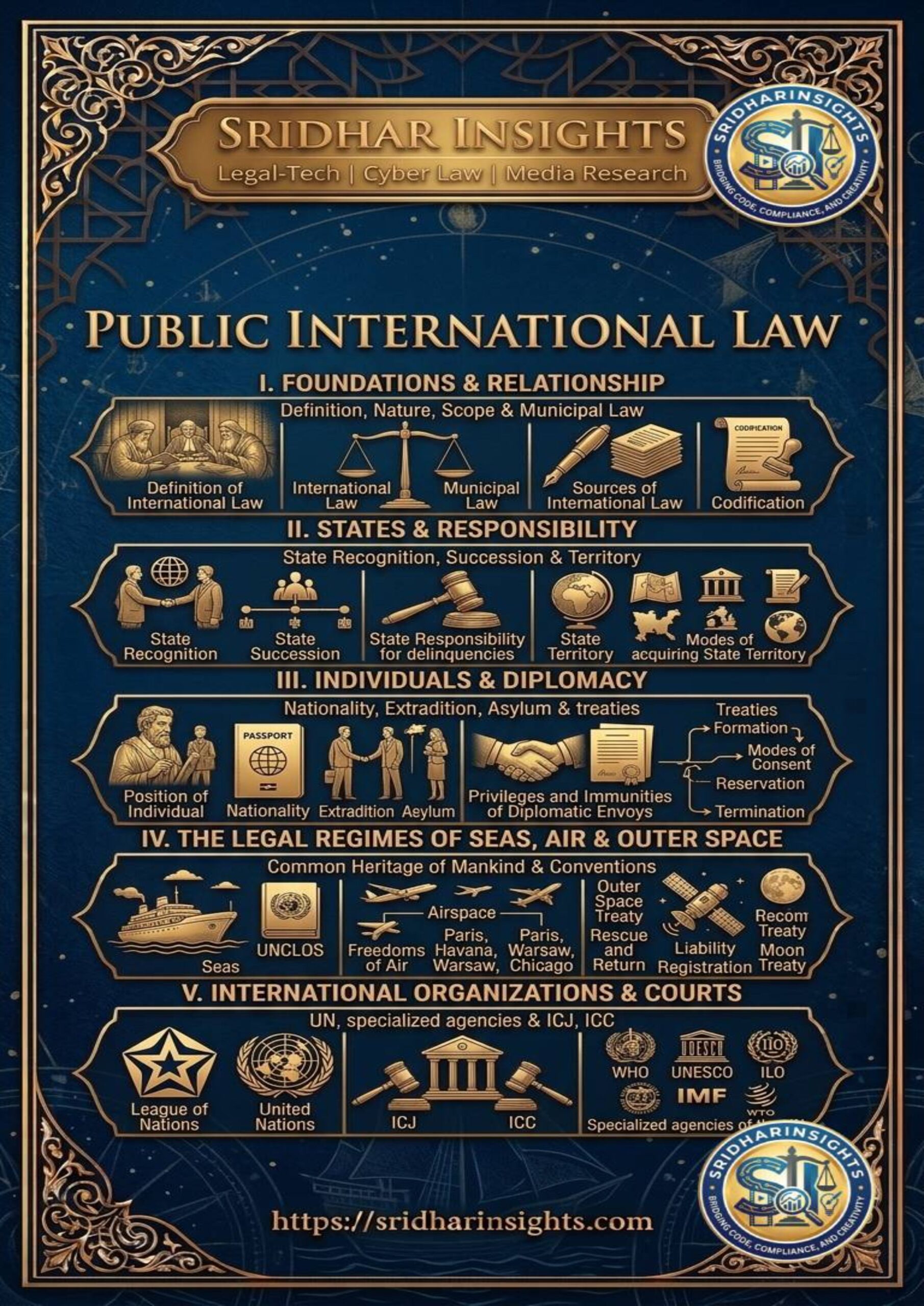
(1). [AIBE 2021] A primary structural reason for the failure of the League of Nations was:
[A]. The absolute ban on war
[B]. The requirement of unanimous voting in the Council and Assembly
[C]. The presence of a strong international army
[D]. Its headquarters being in New York
Correct Answer: [B]. The requirement of unanimous voting in the Council and Assembly
(2). Under the UN Charter, the primary responsibility for the maintenance of international peace and security rests with the:
[A]. General Assembly
[B]. Security Council
[C]. International Court of Justice
[D]. Secretariat
Correct Answer: [B]. Security Council
(3). [CLAT-PG 2019] The UN Security Council consists of 15 members. How many are non-permanent members elected by the General Assembly?
[A]. 5
[B]. 10
[C]. 15
[D]. 20
Correct Answer: [B]. 10
(4). The five permanent members of the UNSC (holding veto power) are:
[A]. USA, UK, France, Germany, Japan
[B]. USA, UK, France, Russia, China
[C]. USA, Russia, China, India, Brazil
[D]. UK, France, Russia, China, Germany
Correct Answer: [B]. USA, UK, France, Russia, China
(5). [AIBE 2023] In the Reparation for Injuries Advisory Opinion, the ICJ held that the United Nations:
[A]. Has no legal personality
[B]. Is a subjective entity binding only on its founders
[C]. Possesses objective international legal personality and can bring international claims
[D]. Can only sue in domestic courts
Correct Answer: [C]. Possesses objective international legal personality and can bring international claims
(6). The International Court of Justice (ICJ) consists of how many judges?
[A]. 9
[B]. 11
[C]. 15
[D]. 21
Correct Answer: [C]. 15
(7). [CLAT-PG 2020] Judges of the ICJ are elected for a term of:
[A]. 5 years
[B]. 7 years
[C]. 9 years
[D]. 15 years
Correct Answer: [C]. 9 years
(8). According to Article 34 of the ICJ Statute, who can be a party in contentious cases before the Court?
[A]. States, Corporations, and Individuals
[B]. Only Sovereign States
[C]. Only UN Organs
[D]. NGOs and States
Correct Answer: [B]. Only Sovereign States
(9). [AIBE 2018] The jurisdiction of the ICJ is fundamentally based on:
[A]. The military power of the UN
[B]. The consent of the States involved
[C]. The geographic location of the dispute
[D]. Universal jurisdiction over all global matters
Correct Answer: [B]. The consent of the States involved
(10). Which of the following CANNOT request an Advisory Opinion from the ICJ?
[A]. The UN General Assembly
[B]. The UN Security Council
[C]. A Sovereign State (e.g., India)
[D]. The World Health Organization (WHO)
Correct Answer: [C]. A Sovereign State (e.g., India)
(11). [CLAT-PG 2022] An Advisory Opinion delivered by the ICJ is legally:
[A]. Binding on the requesting UN organ
[B]. Non-binding, but carries immense legal weight and moral authority
[C]. Binding on all 193 UN member states
[D]. Equivalent to a UNSC resolution
Correct Answer: [B]. Non-binding, but carries immense legal weight and moral authority
(12). The “Optional Clause” under Article 36(2) of the ICJ Statute relates to:
[A]. States opting out of the UN
[B]. States unilaterally accepting the compulsory jurisdiction of the ICJ for legal disputes
[C]. The election of judges
[D]. Advisory opinions
Correct Answer: [B]. States unilaterally accepting the compulsory jurisdiction of the ICJ for legal disputes
(13). [AIBE 2019] The International Criminal Court (ICC) is physically located in:
[A]. Geneva
[B]. New York
[C]. The Hague
[D]. Paris
Correct Answer: [C]. The Hague
(14). Which foundational treaty established the International Criminal Court?
[A]. The Geneva Convention
[B]. The Rome Statute
[C]. The Vienna Convention
[D]. The Paris Agreement
Correct Answer: [B]. The Rome Statute
(15). [CLAT-PG 2021] Unlike the ICJ, the jurisdiction of the ICC extends exclusively to:
[A]. Sovereign States
[B]. International Organizations
[C]. Individuals accused of core international crimes
[D]. Corporations
Correct Answer: [C]. Individuals accused of core international crimes
(16). Which of the following is NOT a crime under the jurisdiction of the ICC (Article 5)?
[A]. Genocide
[B]. Crimes against humanity
[C]. War crimes
[D]. International Drug Trafficking
Correct Answer: [D]. International Drug Trafficking
(17). [AIBE 2022] The principle that the ICC will only prosecute if a State is “unwilling or genuinely unable” to do so domestically is known as the Principle of:
[A]. Universal Jurisdiction
[B]. Complementarity
[C]. Double Jeopardy
[D]. Non-refoulement
Correct Answer: [B]. Complementarity
(18). Can the ICC exercise jurisdiction if the crime was committed by a national of a State that has NOT ratified the Rome Statute?
[A]. Never
[B]. Yes, if the crime occurred on the territory of a State Party, OR if referred by the UN Security Council
[C]. Only if the UNGA votes unanimously
[D]. Only for economic crimes
Correct Answer: [B]. Yes, if the crime occurred on the territory of a State Party, OR if referred by the UN Security Council
(19). [CLAT-PG 2018] The power of the ICC Prosecutor to initiate investigations on their own initiative is called:
[A]. Ex parte
[B]. Suo Motu (Proprio Motu)
[C]. Amicus Curiae
[D]. Habeas Corpus
Correct Answer: [B]. Suo Motu (Proprio Motu)
(20). Article 57 of the UN Charter provides for autonomous bodies linked to the UN via cooperative agreements. These are known as:
[A]. Principal Organs
[B]. Specialized Agencies
[C]. Trust Territories
[D]. Non-Governmental Organizations
Correct Answer: [B]. Specialized Agencies
(21). [AIBE 2023] The specialized agency dedicated to the attainment by all peoples of the highest possible level of health is the:
[A]. ILO
[B]. UNESCO
[C]. WHO
[D]. UNICEF
Correct Answer: [C]. WHO
(22). The International Health Regulations (IHR) is a legally binding instrument managed by the:
[A]. UN Security Council
[B]. WHO
[C]. WTO
[D]. Red Cross
Correct Answer: [B]. WHO
(23). [CLAT-PG 2019] UNESCO is an acronym for the United Nations:
[A]. Environmental, Scientific and Cultural Organization
[B]. Educational, Scientific and Cultural Organization
[C]. Economic, Social and Commercial Organization
[D]. Engineering, Space and Cyber Organization
Correct Answer: [B]. Educational, Scientific and Cultural Organization
(24). The World Heritage Convention (1972), which protects designated cultural and natural sites, is administered by:
[A]. The UNGA
[B]. WHO
[C]. UNESCO
[D]. ILO
Correct Answer: [C]. UNESCO
(25). [AIBE 2020] Which international organization predates the UN, having been formed in 1919 under the Treaty of Versailles?
[A]. IMF
[B]. WHO
[C]. ILO
[D]. WTO
Correct Answer: [C]. ILO
(26). The ILO is unique among international organizations because its governing structure is:
[A]. Composed purely of judges
[B]. Tripartite (Representatives of Governments, Employers, and Workers)
[C]. Exclusively military
[D]. Run by private corporations
Correct Answer: [B]. Tripartite (Representatives of Governments, Employers, and Workers)
(27). [CLAT-PG 2022] The 1944 Bretton Woods Conference led to the creation of the World Bank and the:
[A]. World Trade Organization
[B]. International Monetary Fund (IMF)
[C]. International Labour Organization
[D]. League of Nations
Correct Answer: [B]. International Monetary Fund (IMF)
(28). A primary objective of the IMF is to:
[A]. Regulate ocean shipping
[B]. Prosecute war criminals
[C]. Ensure the stability of the international monetary system and exchange rates
[D]. Draft educational policies
Correct Answer: [C]. Ensure the stability of the international monetary system and exchange rates
(29). [AIBE 2018] The World Trade Organization (WTO) was officially established in 1995 following the signing of the:
[A]. Marrakesh Agreement
[B]. Rome Statute
[C]. Chicago Convention
[D]. Paris Protocol
Correct Answer: [A]. Marrakesh Agreement
(30). The WTO replaced which preceding international trade framework?
[A]. NAFTA
[B]. GATT (General Agreement on Tariffs and Trade)
[C]. OPEC
[D]. EEC
Correct Answer: [B]. GATT (General Agreement on Tariffs and Trade)
(31). [CLAT-PG 2021] The highly effective mechanism within the WTO used to resolve trade conflicts between member states is the:
[A]. Security Council
[B]. Dispute Settlement Body (DSB)
[C]. International Criminal Court
[D]. General Assembly
Correct Answer: [B]. Dispute Settlement Body (DSB)
(32). Which UN organ coordinates the economic and social work of the United Nations and the specialized agencies?
[A]. The Trusteeship Council
[B]. ECOSOC (Economic and Social Council)
[C]. The ICJ
[D]. The Secretariat
Correct Answer: [B]. ECOSOC (Economic and Social Council)
(33). [AIBE 2019] The Trusteeship Council suspended its operations in 1994 because:
[A]. It ran out of funding
[B]. The last remaining trust territory (Palau) achieved independence
[C]. It was merged into the Security Council
[D]. The ICJ declared it illegal
Correct Answer: [B]. The last remaining trust territory (Palau) achieved independence
(34). The chief administrative officer of the United Nations is the:
[A]. President of the General Assembly
[B]. Chief Justice of the ICJ
[C]. Secretary-General
[D]. Director of the WHO
Correct Answer: [C]. Secretary-General
(35). [CLAT-PG 2023] Unlike the League of Nations, the UN Charter (Article 2(4)) mandates that all Members shall refrain from:
[A]. Entering into treaties
[B]. The threat or use of force against the territorial integrity of any state
[C]. Trading with non-members
[D]. Holding domestic elections
Correct Answer: [B]. The threat or use of force against the territorial integrity of any state
(36). An individual accused of the “Crime of Aggression” (waging an illegal war) can potentially be tried by the:
[A]. ICJ
[B]. WTO
[C]. ICC
[D]. WHO
Correct Answer: [C]. ICC
(37). [AIBE 2021] Is India a State Party to the Rome Statute of the ICC?
[A]. Yes, it is a founding member
[B]. No, India has not signed or ratified the Rome Statute
[C]. Yes, but only for economic crimes
[D]. Yes, it joined in 2010
Correct Answer: [B]. No, India has not signed or ratified the Rome Statute
(38). The “Compromis” in ICJ terminology refers to:
[A]. A compromise settlement
[B]. A special agreement between two States to submit a specific dispute to the Court
[C]. The oath taken by judges
[D]. A veto by a permanent member
Correct Answer: [B]. A special agreement between two States to submit a specific dispute to the Court
(39). [CLAT-PG 2020] If a State fails to perform the obligations incumbent upon it under a judgment rendered by the ICJ, the other party may have recourse to the:
[A]. General Assembly
[B]. UN Security Council (Article 94 of the UN Charter)
[C]. Interpol
[D]. ICC
Correct Answer: [B]. UN Security Council (Article 94 of the UN Charter)
(40). The doctrine of Stare Decisis (binding precedent) in the ICJ:
[A]. Applies strictly to all future cases
[B]. Does not apply; decisions have no binding force except between the parties and in respect of that particular case (Article 59)
[C]. Applies only to boundary disputes
[D]. Applies only if the UNSC agrees
Correct Answer: [B]. Does not apply; decisions have no binding force except between the parties and in respect of that particular case (Article 59)
(41). [AIBE 2017] The ILO creates international labor standards primarily in the form of:
[A]. UN Security Council Resolutions
[B]. Conventions and Recommendations
[C]. Tariffs
[D]. Penal codes
Correct Answer: [B]. Conventions and Recommendations
(42). The Headquarters of the WTO are located in:
[A]. Geneva, Switzerland
[B]. Washington D.C., USA
[C]. The Hague, Netherlands
[D]. Paris, France
Correct Answer: [A]. Geneva, Switzerland
(43). [CLAT-PG 2019] Can the UN General Assembly pass legally binding resolutions that force a State to change its domestic laws?
[A]. Yes, UNGA resolutions are strictly binding.
[B]. No, UNGA resolutions are generally recommendatory and not legally binding (except on internal UN budgetary matters).
[C]. Yes, if passed unanimously.
[D]. Only regarding trade.
Correct Answer: [B]. No, UNGA resolutions are generally recommendatory and not legally binding (except on internal UN budgetary matters).
(44). The headquarters of the International Monetary Fund (IMF) are located in:
[A]. London
[B]. Geneva
[C]. Washington, D.C.
[D]. Tokyo
Correct Answer: [C]. Washington, D.C.
(45). [AIBE 2022] Which of the following crimes was explicitly added to the active jurisdiction of the ICC via the Kampala Amendments (activated in 2018)?
[A]. Cyber terrorism
[B]. The Crime of Aggression
[C]. Money laundering
[D]. Counterfeiting
Correct Answer: [B]. The Crime of Aggression
(46). A State seeking emergency financial assistance to correct a severe balance of payments deficit would typically approach the:
[A]. WTO
[B]. ILO
[C]. IMF
[D]. ICC
Correct Answer: [C]. IMF
(47). [CLAT-PG 2021] The fundamental negotiating principle of the WTO that mandates a country cannot discriminate between its trading partners is known as:
(48). Under the UN Charter, the right of individual or collective self-defense in response to an armed attack is preserved under Article:
[A]. 2(4)
[B]. 38(1)
[C]. 51
[D]. 94
Correct Answer: [C]. 51
(49). [AIBE 2023] The ultimate jurisprudential objective of establishing the UN, ICJ, and specialized agencies is to:
[A]. Eradicate state sovereignty completely
[B]. Institutionalize international relations, shifting from anarchy and unilateral force to rule-based cooperation and adjudication
[C]. Create a single global dictatorial government
[D]. Benefit only the veto-holding powers
Correct Answer: [B]. Institutionalize international relations, shifting from anarchy and unilateral force to rule-based cooperation and adjudication
(50). The synergy of Unit V demonstrates that while the UN provides political governance and the ICJ provides legal adjudication, the daily socio-economic stability of the globe relies heavily on the:
[A]. League of Nations
[B]. Unilateral actions of superpowers
[C]. Technical coordination of Specialized Agencies (WHO, ILO, IMF, WTO)
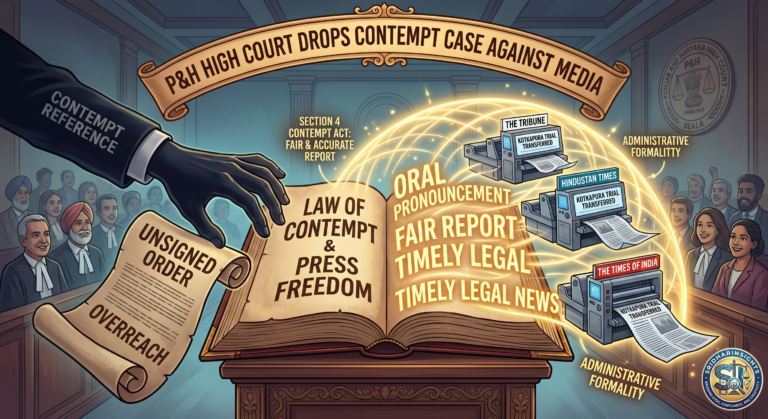
Imagine doing your job accurately, reporting on a court judgment dictated in an open courtroom, only to face criminal contempt charges because the judge had not yet signed the physical document. This alarming situation recently unfolded involving some of India’s biggest media publications. However, the Punjab and Haryana High Court just issued a massive ruling…