Huge Move: SC Demands Tech to Automate Prisoner Release
The Supreme Court of India is bringing a massive technological upgrade to the country’s prison system. Recently, the apex court directed all States and Union Territories to consider adopting a specialized digital software. This software will automatically process the premature release of eligible prisoners.
Consequently, this landmark move aims to eliminate severe administrative delays. It also promises to fix deep-seated flaws within India’s outdated, paper-based remission system.
Here is a detailed look at how a single mistaken court order led the Supreme Court to push for a nationwide technological revolution.
The Shocking Release That Triggered the Reform
A Division Bench comprising Justice J.K. Maheshwari and Justice Atul S. Chandurkar issued these crucial directions. Interestingly, the judges uncovered this systemic problem while hearing a completely unrelated criminal appeal.
A convict named Surendra (alias Sunda) had challenged his life imprisonment for a murder conviction. However, the Court noticed something highly unusual in his records. Surendra had already secured bail in March 2024 through a Chief Judicial Magistrate in Mathura. Surprisingly, he had served only two years and five months of his life sentence.
The magistrate based this speedy release on a misapplied Allahabad High Court order from a different case (Ganesh v. State of U.P.). That older ruling temporarily stated that convicts waiting over six months for premature release decisions should get bail. Because the magistrate wrongfully applied this rule, Surendra walked free entirely too early.
Exposing a Broken Bureaucratic System
Naturally, this glaring judicial error forced the Supreme Court to investigate further. Quickly, the judges uncovered a statewide administrative nightmare in Uttar Pradesh.
The Court realized that thousands of legally eligible prisoners suffer endlessly behind bars. Primarily, authorities still rely heavily on slow, physical paperwork. Furthermore, poor coordination between jail superintendents, police departments, and government review boards causes massive backlogs.
Therefore, eligible prisoners languish in jail simply because their files sit frozen on bureaucratic desks. Refusing to accept these humongous delays, the Supreme Court demanded an immediate technological intervention.
The Solution: ‘E-Prisons Early Release Processing Module’
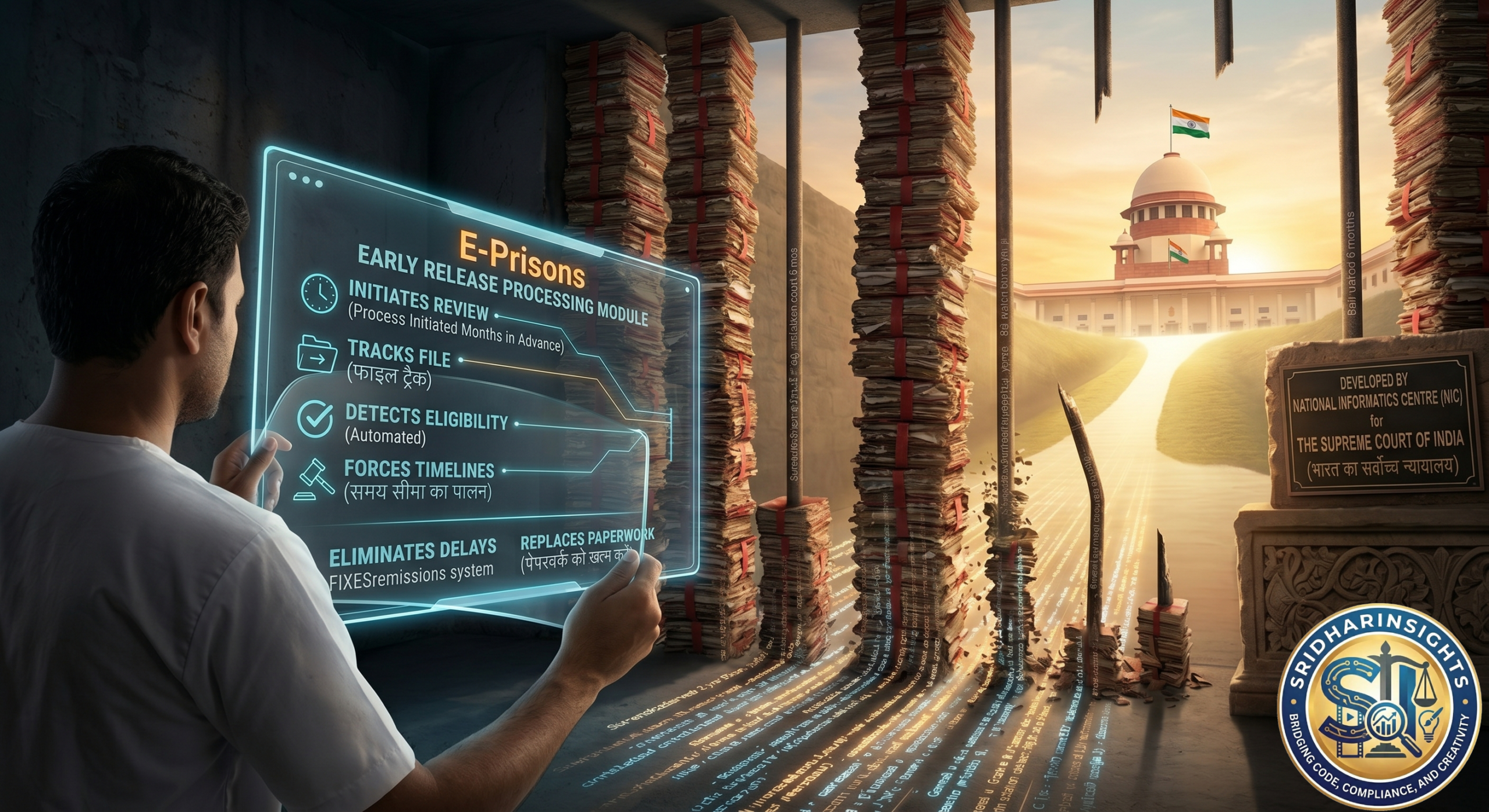
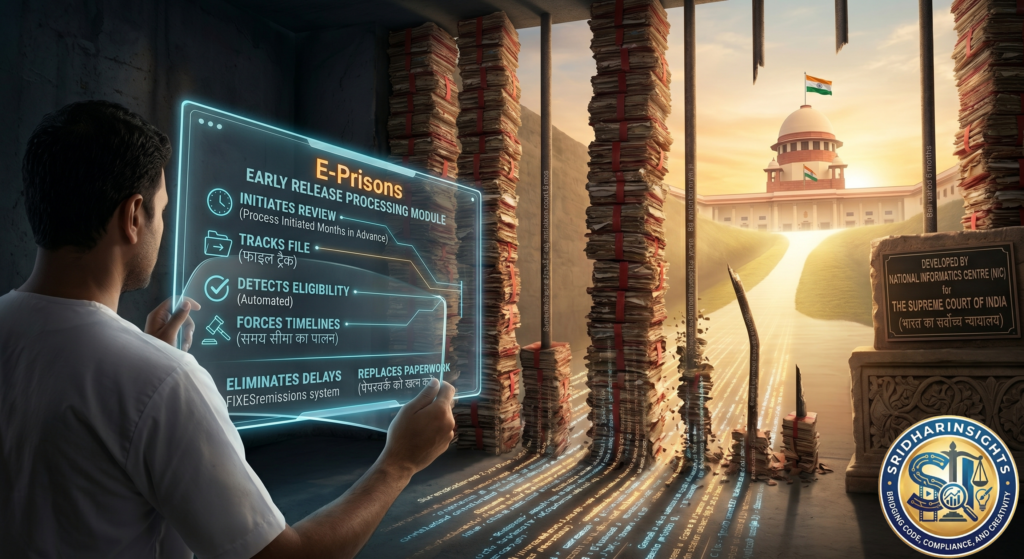
To solve this administrative crisis, the Court endorsed a brilliant digital solution. The National Informatics Centre (NIC) developed the “E-Prisons Early Release Processing Module.”
This software entirely removes the burden from the prisoners. Instead of forcing convicts to file repeated physical applications, the software takes control. It automatically detects exactly when a prisoner becomes legally eligible for remission based on state rules.
Then, it seamlessly initiates the review process months in advance. Additionally, it tracks the file digitally across departments and forces authorities to follow strict timelines.
Agra and Lucknow Pilot Projects
Currently, the Supreme Court has ordered a strict pilot run of this software in Uttar Pradesh. Specifically, authorities will test the digital framework at the Central Jail in Agra and the District Jail in Lucknow. The Court ordered dedicated staffing, technical support, and strict institutional monitoring to ensure the pilot project succeeds.
A Nationwide Call to Action
Most importantly, the Supreme Court wants this technological revolution to go national. The Bench directed its Registry to share this official order with every State and Union Territory across India.
The Court strongly urged all state governments to collaborate directly with the NIC. Ultimately, states must develop and deploy similar automated software to guarantee fair, timely, and seamless justice for all eligible inmates.