Habeas Corpus: HC Asks UP Govt About Journalist Arrest
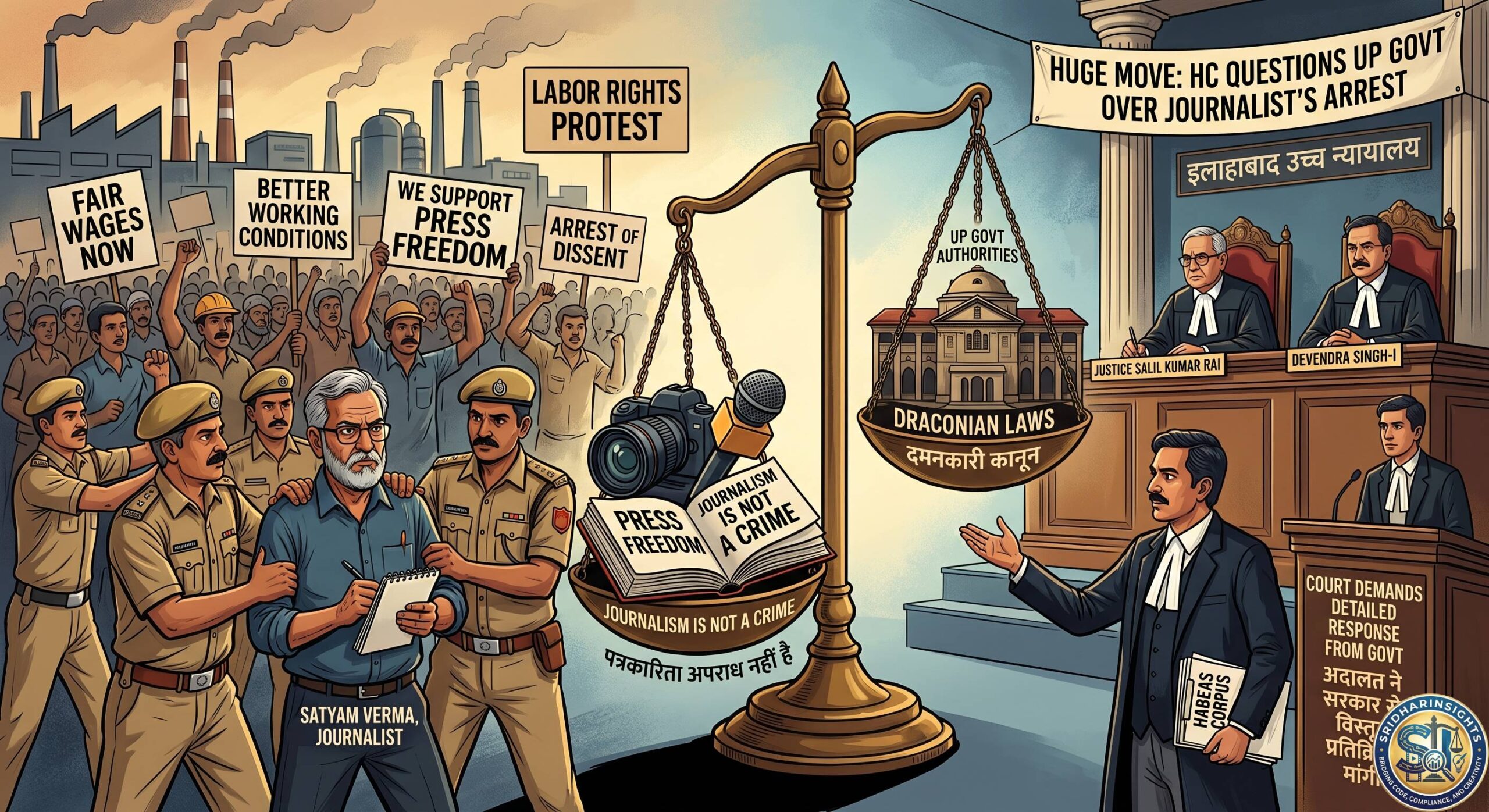
Imagine being arrested simply for reporting on labor rights. Recently, a major controversy erupted following massive worker protests in Noida. Police arrested a 60-year-old senior journalist, Satyam Verma. Authorities completely blamed him for instigating violence during the labor strike.
However, the Allahabad High Court just took serious notice of his ongoing detention. The Court officially demanded a detailed response from the Uttar Pradesh government.
Here is a complete breakdown of this crucial habeas corpus case and what it means for press freedom.
The Habeas Corpus Petition
Satyam Verma’s wife officially filed a habeas corpus petition before the Allahabad High Court. She strongly challenged his sudden arrest, subsequent remand, and continued jail custody.
A Division Bench comprising Justice Salil Kumar Rai and Justice Devendra Singh-I heard the urgent plea. Senior Advocate S.F.A. Naqvi represented the journalist. He argued powerfully alongside advocates Shashwat Anand and Ankur Azad. Together, they highlighted the complete illegality of Verma’s arrest.
After hearing these arguments, the High Court issued a formal notice to the State authorities. The judges granted the government specific time to file a counter-affidavit. This document must clearly explain the legal grounds for keeping the journalist behind bars. Furthermore, the Court allowed the petitioner to file a rejoinder afterward.
Background: The Noida Workers’ Protest
This massive legal battle started back in April 2026. Thousands of industrial workers gathered in Noida. They actively demanded a major wage hike and better working conditions. Unfortunately, the situation escalated quickly.
Clashes broke out across multiple areas. Consequently, the local police launched a massive crackdown. They arrested hundreds of protesting workers.
On April 17, Uttar Pradesh police officers traveled to Lucknow. They unexpectedly arrested Satyam Verma from a local bookstore. The police officially accused him of coordinating the violence. They claimed he used his position in a workers’ union to provoke the massive crowds.
A Larger Attack on Dissent?
Verma’s family and numerous civil rights groups strongly deny these police claims. They insist he never even visited Noida during the protests. Instead, they argue the government is unfairly targeting his progressive journalism. Verma regularly translates labor-rights books and writes extensively for a workers’ magazine.
Shockingly, the police escalated the matter in mid-May. They slapped the draconian National Security Act (NSA) against him. This extreme law allows authorities to hold individuals for months without a regular trial.
However, this specific Allahabad High Court hearing focuses purely on his initial habeas corpus plea. The bench has now listed the matter for its next major hearing on July 13, 2026.
Why This Case Matters
This case represents a massive test for civil liberties in India. Can police arrest journalists under extreme laws simply for covering labor issues? The Allahabad High Court will soon decide if the state crossed a major legal line.