Access to Justice: 1 Huge Challenge for Tort Law
Imagine facing a medical error that costs you thousands. You go to a lawyer for help. The lawyer asks for a huge fee upfront. They also warn you the case might take seven years. Most people just pay their medical bills and stay silent. Sadly, this is the harsh reality in India today.
Tort law aims to fix civil wrongs like negligence. It helps victims get fair compensation for their losses. It does not punish people like criminal law does. Instead, it restores the victim to their original state.
How Courts Have Helped So Far
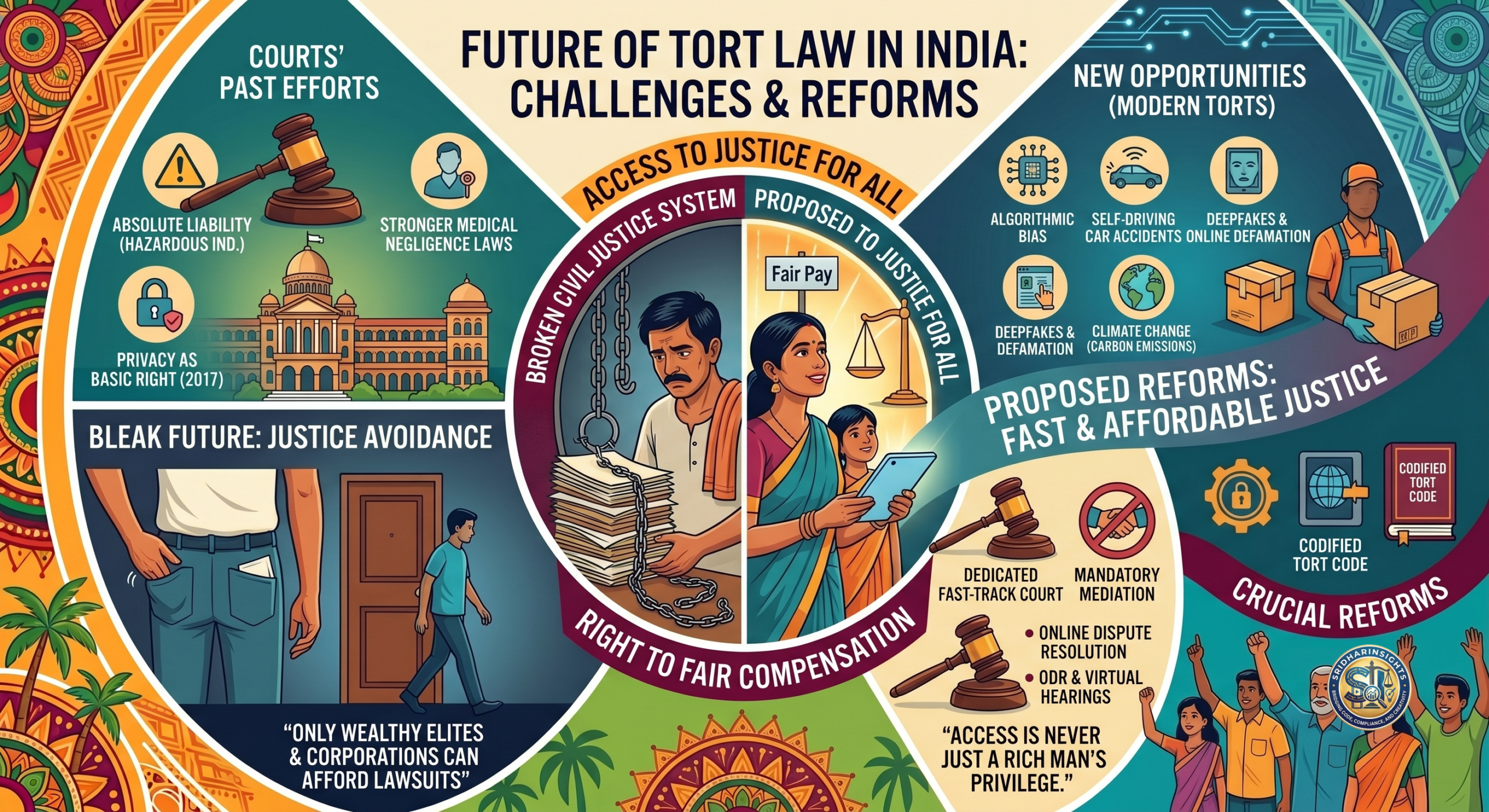
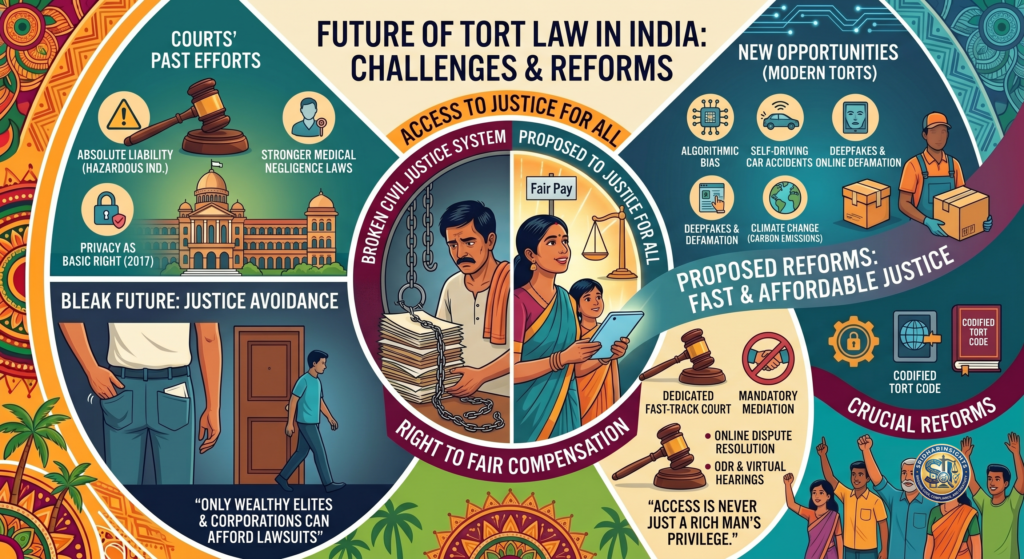
Indian courts have certainly expanded tort law over time. In 1987, the Supreme Court created absolute liability rules. This made hazardous industries strictly accountable for environmental damage. In 2017, the court made privacy a basic right. This opened doors for lawsuits against data breaches. Medical negligence laws have also become much stronger.
However, these great progressive ideas rarely reach ordinary citizens. High courts solve big systemic issues through public interest litigation. But small individual claims get stuck in district courts.
New Opportunities for Tort Law
India is entering a fast digital and green transition. This change brings huge new opportunities for tort law. Artificial intelligence can cause harm through algorithmic bias. Self-driving cars might cause confusing road accidents. Deepfakes and online defamation ruin personal reputations instantly.
Climate change will also create new legal challenges. Companies might face lawsuits for heavy carbon emissions. The growing gig economy could see new worker accident claims. E-commerce platforms must face strict product liability rules. Tort law can easily adapt to these modern problems.
Why the Future Looks Bleak
Despite these new opportunities, the future looks very tough. The main problem is India’s severely broken justice system. Civil cases in lower courts take five to seven years. Over 4.8 crore cases are currently pending in lower courts.
Litigation costs make this delay even worse. Lawyer fees and court costs are extremely high. A middle-class person might spend more on the lawyer. The cost often exceeds the actual compensation they receive.
This causes a huge problem called “justice avoidance.” Victims silently accept their losses instead of fighting back. Only wealthy elites and big corporations can afford lawsuits. This clearly makes tort law unfair for the common man.
Crucial Reforms for Access to Justice
We need urgent reforms to fix this broken system. First, India must create dedicated fast-track tort courts. These courts should handle claims below five lakh rupees. They must resolve cases within three to six months.
Second, the government should cap recoverable litigation costs. We should promote early settlements through mandatory mediation. Third, technology can speed up small claim resolutions. Online dispute resolution and virtual hearings are vital tools.
Finally, India needs to officially codify basic tort principles. This will make rules clear and stop endless confusion.
The future of tort law depends on accessible justice. Without massive reforms, these legal rights only exist on paper. Access to justice is never just a rich man’s privilege. It is a basic right for every single Indian citizen.